


What Are Myomas and Polyps? Symptoms and Treatment Options

What Are Myomas and Polyps? Symptoms and Treatment Options
Myomas and polyps are among the commonly encountered gynecological conditions in women’s health. Both conditions can be associated with the uterus; while they are noticed during routine check-ups without presenting any symptoms in some women, in other cases, they can cause complaints such as menstrual irregularities, bleeding problems, or issues that may affect family planning. Regular gynecological check-ups hold great importance for the early evaluation of such formations.
What is a Myoma?
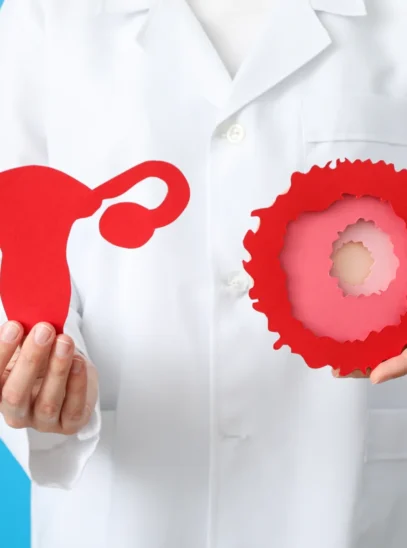
A myoma (uterine fibroid) is a benign (non-cancerous) tumor that develops from the muscle layer of the uterus. They are generally not cancerous and can be observed in different sizes in many women. Myomas can be solitary or multiple, and they can develop inside, within the wall of, or outside the uterus. They tend to be observed more frequently particularly in women of reproductive age.
What is a Polyp?
A polyp is a generally benign tissue growth that can develop in the inner lining of the uterus (endometrium) or on the cervix. While some polyps remain millimetric in size, others can grow large enough to fill the uterine cavity, leading to bleeding irregularities. There are two primary types:
Intrauterine polyp (Endometrial polyp)
Cervical polyp (Servikal polyp)
What Are the Symptoms of Myomas and Polyps?
Symptoms can vary based on the size, localization, and number of the formations. Frequently encountered complaints include:
Heavy or prolonged menstrual bleeding
Menstrual irregularity and intermenstrual bleeding
A sensation of pain/pressure in the groin or pelvic region
A feeling of fullness in the abdomen
Frequent urination or constipation (due to large myomas pressing on surrounding organs)
Pain during intercourse
Difficulty conceiving
A specialist evaluation is absolutely required in case of any bleeding observed after menopause.
What Are the Types of Myomas?
Myomas are divided into three primary groups according to their localization in the uterus:
Submucosal Myoma: It grows toward the intrauterine cavity; it is the type that causes bleeding problems the most.
Intramural Myoma: It develops within the muscular wall of the uterus; it can lead to enlargement of the uterus.
Subserosal Myoma: It grows toward the outer surface of the uterus; it generally creates pain by pressing on surrounding organs.
Diagnosis and Identification Methods
Various modern imaging methods are used during the diagnostic process following a specialist evaluation:
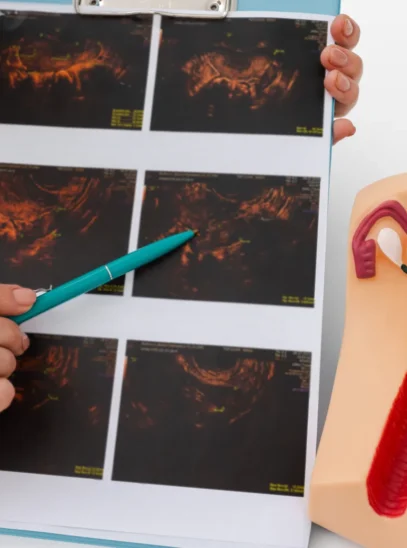
Ultrasonography (USG): It is the first and most widely used method.
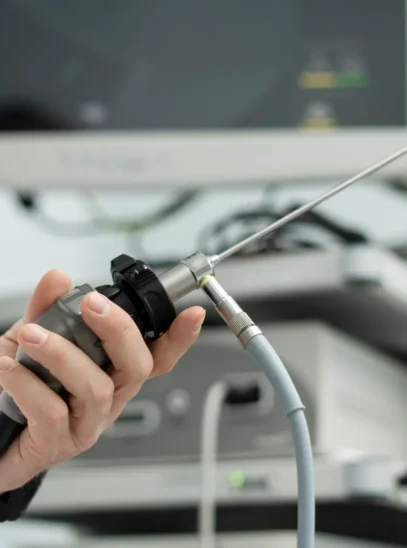
Hysteroscopy: Both diagnosis and treatment can be provided by entering the uterus with a lighted camera.
Sonohysterography: Polyps are visualized clearly by introducing fluid into the uterus.
MRI (Emar): It may be required for mapping numerous or very large myomas.
Myoma and Polyp Treatment Options
The treatment plan is personalized depending on the patient’s age, the severity of the symptoms, and the pregnancy plan.
Myoma Treatment:
Follow-up: Small myomas that do not present symptoms can be monitored through regular check-ups.
Medical Treatment: Hormone regulators can be used to bring bleeding and pain under control.
Surgery (Myomectomy): The removal of only the myoma; the uterus is preserved.
Hysterectomy: The removal of the uterus in advanced age and in cases where other treatments do not yield results.
Polyp Treatment: Polyps generally do not disappear spontaneously. The most effective method is Hysteroscopic Polyp Removal. With this procedure, the polyp is directly visualized, removed, and sent for pathological examination.
Conclusion
Although myomas and polyps are mostly benign, they can affect reproductive health and daily quality of life. Thanks to early diagnosis, they can be monitored without the need for surgery, or easily treated using closed (minimally invasive) methods.
Important Note: This content is for informational purposes only. Please consult an obstetrician-gynecologist for diagnosis and treatment processes.