


What is Uterine Cancer (Endometrial Cancer)? Symptoms, Risk Factors, Diagnosis and Treatment Process

Basic Information About Uterine Cancer
Uterine cancer is an important type of gynecological cancer that mostly develops from the endometrial tissue making up the inner lining of the uterus and is observed more frequently in women, particularly in the postmenopausal period. Treatment success can be high when it is noticed in the early stages. For this reason, knowing the symptoms, not skipping regular check-ups, and correctly evaluating risk factors carry great importance.
What is Uterine Cancer?
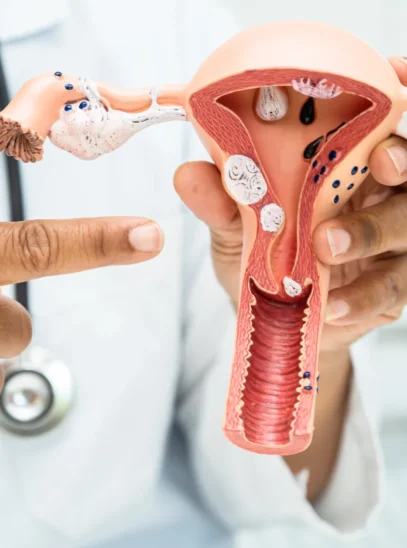
The uterus is one of the crucial organs of the female reproductive system. Uterine cancer generally begins in the endometrial layer that lines the inner surface of the uterus. Therefore, it is also referred to as “endometrial cancer” in many cases. Uterine sarcomas, which are more rarely encountered, can develop from the muscle or supporting tissues of the uterus.
Uterine cancer is one of the prevalent types among gynecological cancers observed in women, and the likelihood of its occurrence can increase particularly in the postmenopausal period.
What Are the Symptoms of Uterine Cancer?
The most common symptom of uterine cancer is abnormal vaginal bleeding. Any postmenopausal bleeding, in particular, must absolutely be evaluated. Commonly observed symptoms include:
Postmenopausal vaginal bleeding
Menstrual irregularity or heavy bleeding that differs from normal
Intermenstrual bleeding
A sensation of pain or pressure in the pelvic region
Post-coital bleeding (bleeding after intercourse)
Watery or bloody vaginal discharge
Weight loss or fatigue in advanced stages
Although these symptoms do not always mean cancer, they must definitely be evaluated by an obstetrician-gynecologist.
Uterine Cancer Risk Factors
Certain situations can increase the risk of developing uterine cancer. Prominent risk factors include:
Advanced age and obesity
Diabetes and hypertension
Late onset of menopause
Having never given birth
Prolonged estrogen exposure
Polycystic ovary syndrome (PCOS)
A family history of uterine, colon, or ovarian cancer
Tamoxifen use
Healthy lifestyle habits and regular check-ups can play an important role in risk management.
How is Uterine Cancer Diagnosed?
In case of suspected uterine cancer, various diagnostic methods can be used following a physician’s evaluation. Methods that can be applied during the diagnostic process include:
Gynecological examination and transvaginal ultrasonography
Endometrial biopsy
Hysteroscopy and Dilation & Curettage (D&C)
MRI or CT imaging
Definitive diagnosis is mostly established via biopsy.
Stages of Uterine Cancer
The stage of uterine cancer is determined according to the spread status of the disease:
Stage 1: The cancer is confined strictly inside the uterus.
Stage 2: Spread to the cervix is present.
Stage 3: Spread to nearby tissues or lymph nodes is observed.
Stage 4: Spread to distant organs (urinary bladder, bowel, lungs, etc.) is present.
Establishing a diagnosis in the early stages is critical in terms of treatment planning.
Uterine Cancer Treatment Methods
Treatment is planned depending on the stage of the disease, general health status, and tumor characteristics. Options that can be applied include:
Surgical Treatment: It is the most frequently preferred method. The removal of the uterus, fallopian tubes, and ovaries may be required.
Radiotherapy: It can be used to prevent recurrence after surgery or as the primary treatment in specific situations.
Chemotherapy: It is preferred in advanced-stage cases or those showing widespread metastasis.
Hormone Therapies: It may be suitable in specific patient groups (for instance, young patients who wish to preserve their fertility).
Targeted Therapies / Immunotherapy: These are specialized treatment options developed through modern medical technologies.
Is It Possible to Prevent Uterine Cancer?
Although not every case can be completely prevented, certain lifestyle modifications can help reduce the risk:
Healthy weight management and a balanced diet
Regular exercise
Keeping diabetes and hypertension under control
Prompt specialist evaluation in case of abnormal bleeding
Regular gynecological check-ups
When Should You Consult a Doctor?
A specialist opinion should be obtained without losing time in the following situations:
Any bleeding observed after menopause
Prolonged and irregular menstrual bleeding
Unexplained pelvic pain
Abnormally foul-smelling or colored vaginal discharge
Conclusion
Uterine cancer is a disease that can present symptoms in the early stages and can be successfully treated with timely diagnosis. Postmenopausal bleedings, in particular, should be taken into consideration, and regular women’s health check-ups should not be neglected. Conscious monitoring is the most important step in health management.
Important Note: This content is for informational purposes only. An obstetrician-gynecologist must definitely be consulted for diagnosis and treatment processes.